
Move better. Live better.
Helping you regain full health and function.
Chartered Physiotherapist, based in Evesham, providing treatment for all bodily, musculoskeletal problems, and specialising in spinal, chronic (long-term) and sporting injuries.
- Assessment, diagnosis, and treatment of bodily, musculoskeletal injuries and biomechanical movement problems
- Effective treatment based upon an accurate diagnosis
- Full and thorough management of all patient problems, simple or complex
- Workplace Ergonomic Assessment
ABOUT ME
My name is Jonathan Elabor and I’m an HCPC registered, senior Chartered Physiotherapist, with 27 years’ working experience.
This history, together with my own personal one, of having both competed at Olympic level and sustained numerous (often severe) physical injuries along the way, has given me first-hand experience and deep understanding of all that’s involved at, and in, every stage of injury-recovery – whether social, occupational, sporting or otherwise – from initial onset to final resolution.

- Treat
- Educate
- Guide
Analogies often help
If a light bulb keeps on flickering, the problem might be the bulb itself, or the switch, or the wire, …possibly all three.
To fix the flickering, you first have to diagnose what’s causing it.
If a car tyre is worn, you change the tyre. If it’s worn because the wheel is misaligned, you also have to correct the wheel.
Likewise, if a muscle is tight, you (can) simply massage the muscle. But if it’s tight because the nerve is being irritated somewhere, then you also have to resolve the irritation.
A big key in, and first step towards, helping people resolve their bodily problems, is first to find out and understand what those problems actually are. Not always obvious, and often not easy!
PRAGMATIC APPROACH
Throughout my career I have found that the sorts of people, physiotherapists or otherwise, who have developed and produced oft-prescribed, post-surgical rehabilitation exercises etc., have never undergone the specific (or indeed any) surgery about which they are writing.

I’ve also found that there is often a HUGE difference between the ‘academic’ and ‘actual’ application of such exercises.
(Depending upon whether you are talking personally or) professionally, I have had the (mis)-fortune to have experienced numerous serious injuries and surgeries, and a veritable plethora of minor ones.
As a result, I have a very understanding, ‘realistic’ and pragmatic approach to my patients’ rehabilitation, both exercise and timeline-wise.
Assessment
Treatment
Result
what i can help you with
- Acute and chronic spinal problems and related upper/lower-limb pain and restricted movement
- Lumbo-sacral ('Core') stability to improve athletic performance
- Sporting injuries
- Orthopaedic and rheumatological joint conditions and pain
-
Work-related positional, postural and biomechanical injuries and problems
(Ideally, a work environment should maintain, or even contribute to, an individual's well-being, not hinder it. If you're facing workplace-related, musculoskeletal problems and pain, I can often help identify the causes and correctional actions needed.)
Workplace Ergonomic Assessment
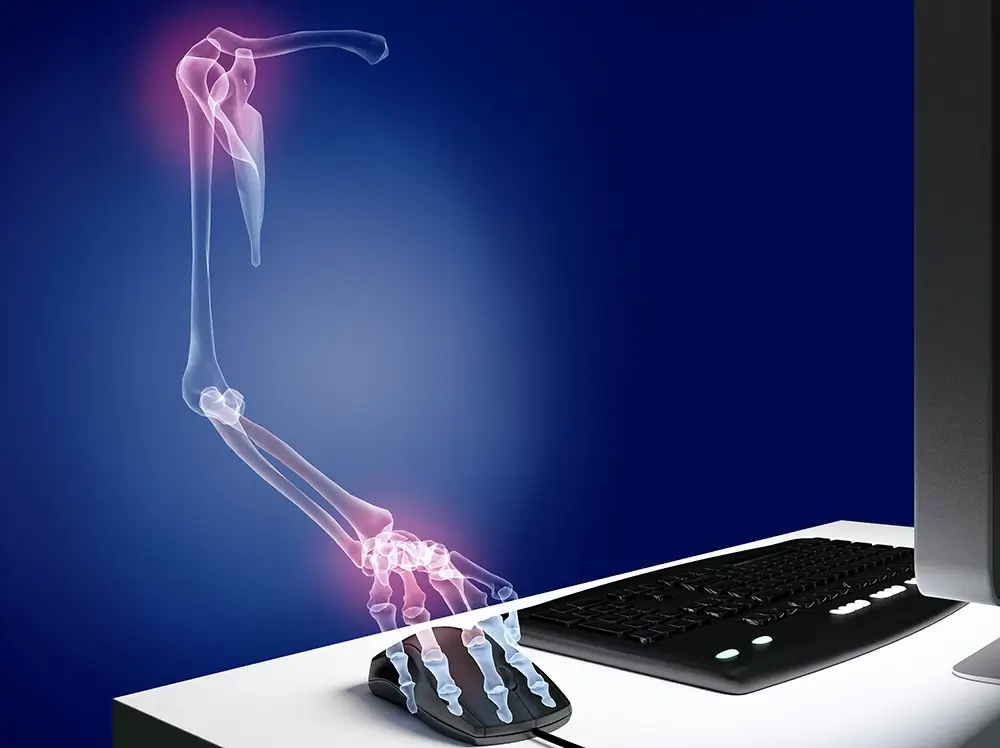
Workplace-generated aches, pains and bodily dysfunctions, are often a major problem for sufferers and companies alike, frequently causing substantial financial losses to both.
These problems are often the results of poor personal posture, combined with inappropriate work-station settings.
I offer an ‘onsite’ Workplace Ergonomic Assessment service, whereby I come into your company offices/location(s), assess both the workers and their working environment, then assist them to adjust and correct both, as appropriate, in order to negate the problem(s) and prevent future occurrences.
Daily rates apply. Number of assessments available is limited only by, working day length (9am-5pm; 1hr lunch break) and, time-allocation necessary per person.
what my patients say about me
March 2024
Are you ready?
physio tips


Frequently asked question
about physiotherapy
When should I see a physiotherapist?
You do not need to wait until pain becomes severe before seeing a physiotherapist.
An assessment can be helpful if pain or stiffness is not improving, keeps returning, affects your sleep or daily activities, or prevents you from working, exercising or doing the things you normally enjoy.
It is also worth seeking advice if you have recovered from an injury but something still does not feel right, or if previous treatment has not resolved the problem.
The earlier the cause of a problem is properly understood, the sooner an appropriate treatment or rehabilitation plan can begin.
Do I need a GP referral before seeing a physiotherapist?
No. You can normally see a private physiotherapist directly without first being referred by your GP.
Physiotherapists are trained to assess musculoskeletal problems and determine whether physiotherapy is appropriate. If your assessment suggests that you need further medical investigation, imaging or input from another healthcare professional, your physiotherapist can advise you on the appropriate next step.
If you are using private medical insurance, however, it is worth checking your policy first, as some insurers may have their own referral requirements.
What happens during my first physiotherapy appointment?
Your first appointment is primarily about understanding the problem rather than simply treating where it hurts.
Your physiotherapist will ask about your symptoms, how and when they started, previous injuries or treatment, your general health and how the problem is affecting your everyday life.
This is followed by a physical assessment, which may include examining your movement, strength, joints, muscles, nerves and other relevant structures.
The aim is to establish the most likely cause of your symptoms and then discuss the findings with you, together with the most appropriate treatment and rehabilitation options.
Whether or not you receive any treatment during your initial consultation, will depend on may factors, including, assessment findings/diagnosis and time availability.
How does a physiotherapist work out what is causing my pain?
The location of pain does not always tell us where the actual problem is.
A physiotherapy assessment combines what you tell us about your symptoms with a physical examination of relevant muscles, joints, nervrs, movement and strength. Sometimes an area away from where you actually feel the pain also needs to be examined.
For example, shoulder or arm pain can sometimes originate from irritation of a nerve in the neck. In this situation, treating only the painful shoulder may provide some degree of pain relief, but this is likely to only be temporary without the underlying cause being addressed.
This is why we believe that effective treatment starts with an accurate diagnosis based on a thorough assessment.
Do I need an MRI, X-ray or scan before seeing a physiotherapist?
Usually, no.
Many muscle, joint and nerve-related problems can be assessed clinically without imaging. Your symptoms, medical history and physical examination often provide the information needed to begin appropriate management.
Scans can be extremely useful when they are clinically indicated, but they are not always necessary and findings on a scan do not always explain why somebody is experiencing pain.
If your assessment suggests that imaging or another medical investigation would be useful, your physiotherapist can advise you about the next step.
How many physiotherapy sessions will I need?
There is no standard number of sessions because every patient and every problem is different.
Some conditions may require only an assessment, advice and a programme that you can continue independently. Other problems, particularly long-standing or more complex conditions, may benefit from treatment and rehabilitation over a longer period.
Factors such as the cause of the problem, how long you have had it, the extent of any injury, your general health and how you respond to treatment will all influence recovery.
After assessing you, your physiotherapist should be able to give you a clearer idea of what treatment may be required and review this as you progress.
Is it normal to feel sore after physiotherapy or exercise?
Some temporary soreness can occur after treatment or when starting new exercises, particularly when muscles or joints are being used in ways they are not accustomed to.
However, treatment and rehabilitation should not continually make your symptoms significantly worse.
If an exercise causes severe pain, produces new symptoms, or leaves you noticeably worse for a prolonged period, stop the exercise and discuss it with your physiotherapist. It may simply need to be modified or progressed differently.
Rehabilitation should be appropriate to you and your particular condition rather than following a one-size-fits-all programme.
What if I have already tried physiotherapy or other treatment and it hasn't worked?
Previous treatment not working does not necessarily mean that nothing more can be done.
Sometimes it is worth going back to the beginning and reassessing the problem rather than simply repeating the same treatment. The original diagnosis may need reconsidering, a different structure may be involved, or the area where you feel the pain may not actually be where the problem originates.
As stated, referred pain from a neck problem can sometimes produce pain in the shoulder or arm. In this case, repeated treatment of the shoulder alone will likely never fully resolve the symptoms.
For persistent or recurring problems, a fresh and thorough assessment can therefore be particularly valuable.